
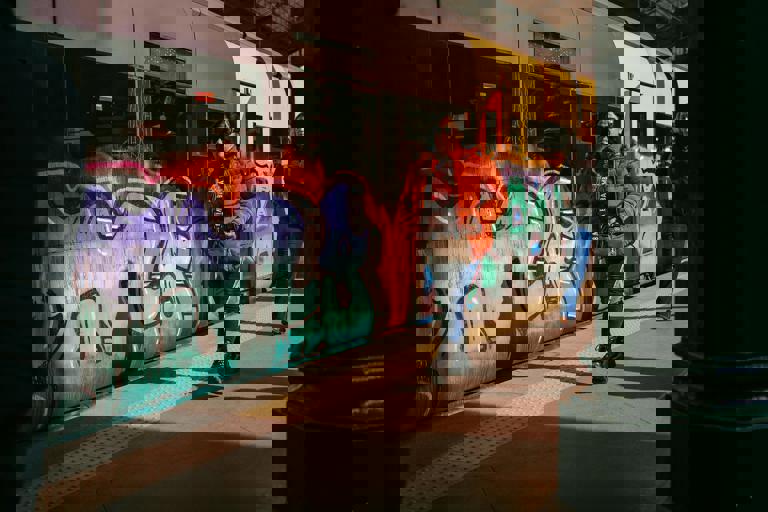
The grand halls and echoing corridors of one of the city’s busiest train stations have been transformed virtually overnight into a living art installation, offering commuters a striking departure from their routine journeys. The Avant-Garde Exhibition, which opened this week, sees platforms and tracks reimagined by a collective of contemporary British artists. Their vision is to challenge everyday perceptions by integrating vibrant sculptures, interactive murals, and dynamic light installations along the public transit route.
This unprecedented reinterpretation of public space was conceived by curatorial director Sophie Langley, who described the project as 'a dialogue between movement, architecture, and creativity.' Langley emphasized that the station was intentionally chosen for its constant flow of people from various walks of life, turning the daily commute into an act of engagement with art. According to her, the exhibition stands as a testament to the potential of everyday places to inspire.
Collaborating artists include both established and emerging names such as Mark Brannigan, whose kinetic sculptures seem to dance alongside passengers, and Nadine Hall, renowned for her multi-sensory sound installations that echo the hustle of the station. The exhibition also provides space for digital artists, offering immersive projections that envelop the station’s columns and vaulted ceilings. Each artist was tasked with creating works that responded to the unique energy of the site.
Early responses from commuters have been overwhelmingly positive, with many expressing surprise and delight at encountering art in an unlikely setting. 'I never thought my journey to work could be so much fun,' said Priya Sharma, a local office worker. She described the experience as transformative, adding that the art made her more mindful of the spaces she usually rushes through. Social media platforms have seen a surge in photos and videos showcasing the installations, further amplifying their reach.
Notably, the exhibition team prioritised accessibility and inclusivity in their design. Installations feature multilingual descriptions, tactile elements for visually-impaired visitors, and step-free access to all exhibition areas. Educational workshops are being held on weekends, inviting children and adults alike to interact directly with artists and try their hand at creating collaborative pieces. The curators report a significant increase in family visits to the station since the show's debut.
Transport authorities played an active role in facilitating this ambitious project, working closely with the artists to ensure safety and minimal disruption to regular train services. Head of Station Operations Charles Emery commented, 'This partnership underscores our commitment to enriching the daily experiences of our passengers.' According to official figures, the station has seen a 15% rise in footfall since the exhibition’s opening, a testament to its appeal to both regular commuters and new visitors.
For many, the project also serves as a comment on the changing face of public art in the United Kingdom. Art critic Elspeth Gray noted, 'We’re witnessing a renewed investment in community-centred work that brings culture out of galleries and into everyday life.' She argues that such exhibitions have the power to democratise art, breaking down perceived barriers and encouraging broader engagement across social and age groups.
The environmental impact of the exhibition has not been overlooked, either. Many of the installations have been crafted using upcycled or locally-sourced materials, reflecting the artists’ commitment to sustainability. Train schedules now include guided eco-tours of the art, led by volunteers who explain the environmental significance of each work. These efforts align with broader city goals to promote green initiatives and public transit.
With the Avant-Garde Exhibition scheduled to run for three months, organisers hope it will pave the way for similar creative interventions in public spaces throughout the UK. Discussions are already underway to adapt the concept for bus terminals and even neighbourhood high streets. As Sophie Langley put it, 'Our aim is not only to beautify but to connect, to remind us that art has the power to shape and uplift our shared environments.'